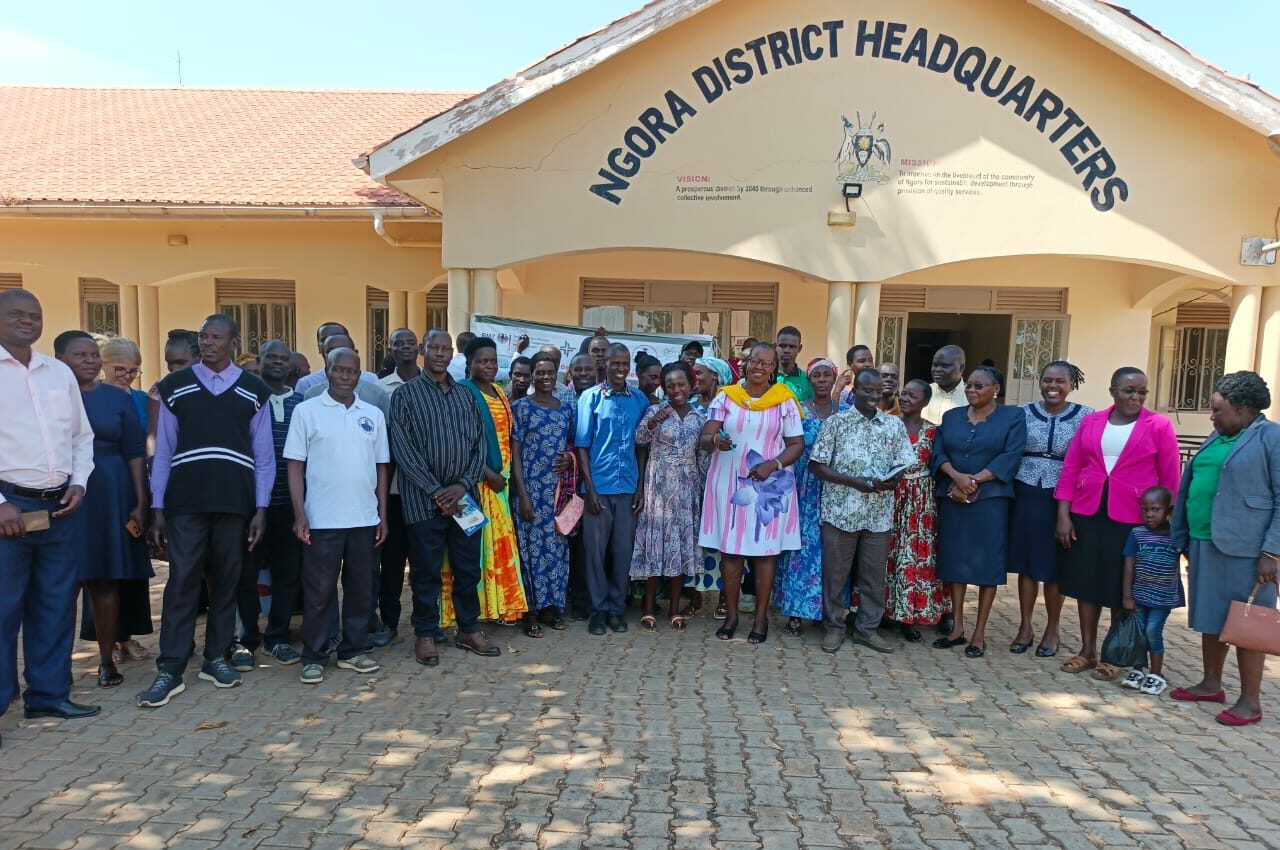
The Resident District Commissioner (RDC) of Ngora district, Josephine Omara, expressed excitement and optimism following the introduction of Phase II of the Ateker Development Foundation Multi-Actor Partnership (ADEFO-MAP2) project. Ms Omara described the project as a transformative intervention that will redefine the economic future of smallholder farmers in the district and across the Teso sub-region.
Speaking during the official district launch and kick-off event of the project implemented by Soroti Catholic Diocese Integrated Development Organization (SOCADIDO) under the umbrella of Ateker Development Foundation (ADEFO), Omara said, Ngora is privileged to once again host a project that has already demonstrated tangible impact in its first phase.
“We are more than excited, first of all, to have SOCADIDO in our second phase, especially ADEFO, which is trying to help our smallholder farmers,” Omara said. “In Phase One, we succeeded very well, and we know our farmers are no longer the same.”
The first phase of the project had focused on supporting farmers in Mukura and Kobwin sub-counties, where improved seeds, training, and farmer organization led to significant improvements in yields and farming practices.
According to the other district leaders, the results were visible in household incomes and food security levels.
Omara noted that beyond providing agricultural inputs, the project addressed deeper systemic issues affecting farmers particularly knowledge gaps and post-harvest handling challenges.
“One of the biggest challenges has not been production alone, but lack of knowledge,” she emphasized. “Our farmers were earning low incomes not because they had no produce, but because of poor handling of their harvest.”
She pointed out that produce from Teso, when transported to markets in neighboring districts such as Busia, was often rejected due to poor post-harvest management. Improper drying, poor packaging, and contamination had led to losses that discouraged farmers.
“With the coming of SOCADIDO, our farmers now understand how to properly dry their products after harvest. They have better knowledge on storage and quality control. This is critical if we want to compete in better markets.”
The RDC stressed that the project is also driving a mindset shift among farmers moving from traditional subsistence practices to modern, market-oriented agriculture.
“We have been talking about changing the mindset. We are now moving from traditional methods to modern farming. This is the way to go as Teso sub-region,” she said.
Ngora is among six Teso districts selected under the ADEFO MAP Phase II project, which also covers; Kaberamaido, Katakwi, Kapelebyong, Soroti districts, and Soroti City. This is therefore, part of a broader regional effort to strengthen agricultural value chains.
The project seeks to improve the socio-economic situation of smallholder farmers by promoting sustainable agricultural practices, strengthening cooperatives, and enhancing market access through a functional Multi-Actor Partnership (MAP) platform.
Omara pledged full government support for the initiative, noting that her office will play a critical mobilization role.
“As the representative of His Excellency and as RDC, my work is to mobilize farmers. I will ensure that especially the 60% women who have been targeted are strengthened in capacity.”
She underscored the importance of empowering women, who form the majority of the agricultural workforce in Teso but often lack access to decision-making platforms and financial control.
“At least each woman should be earning 12,500 shillings per day. That is what we should be looking at, money in the pocket and improvement in household economy.”
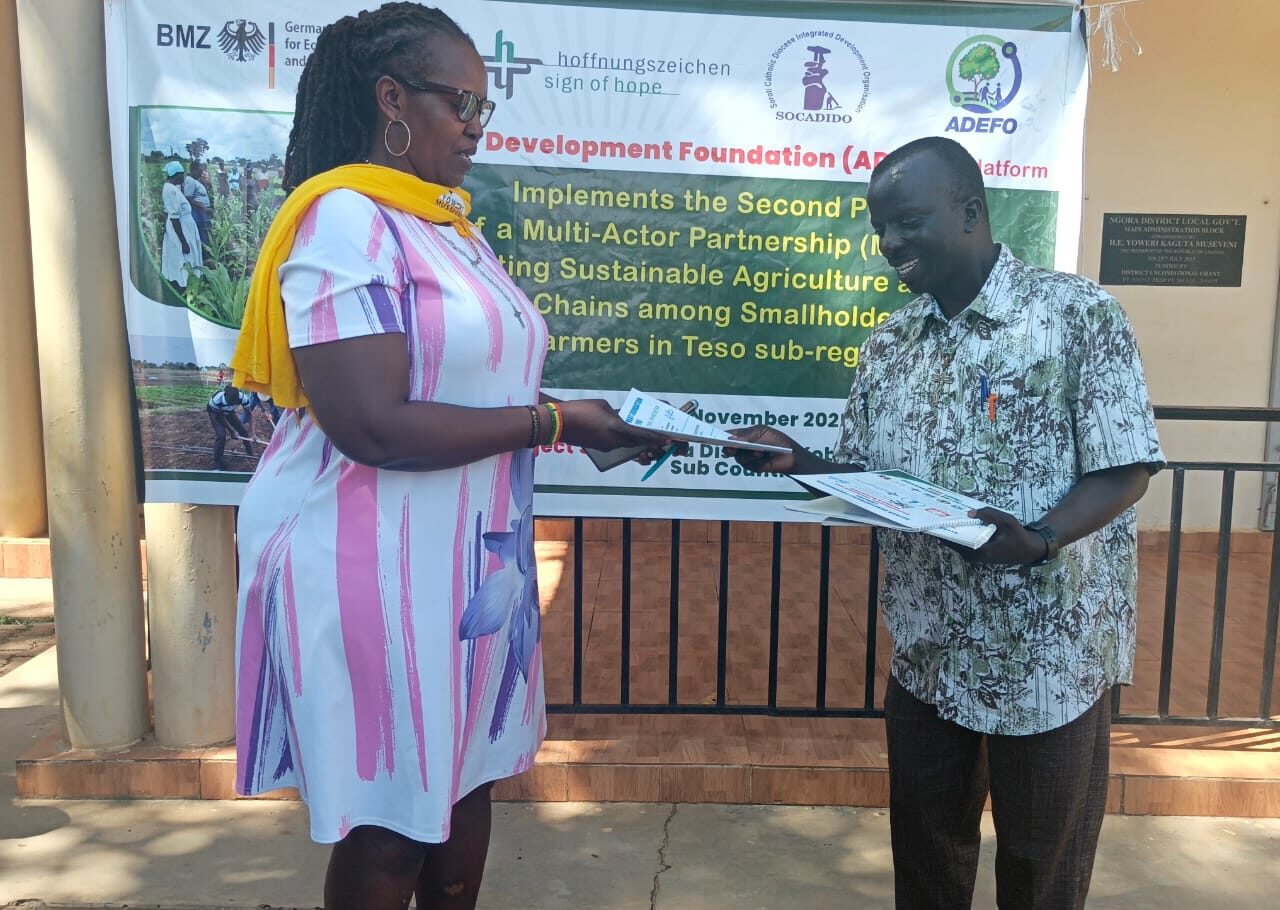
Her remarks resonated strongly with the gender-focused design of the project, which targets 3,600 direct beneficiary households, 60% of whom are women, and indirectly aims to benefit over 64,800 people across the sub-region.
Ngora district Vice-Chairperson Grace Amongin also welcomed the second phase, recalling the positive outcomes of the first intervention.
In Phase One, farmers in Mukura and Kobwin were supported and their lives changed,” Amongin said.
She acknowledged that while yields improved significantly, market access remained a challenge. Phase II, she noted, addresses that gap by focusing heavily on cooperatives and group-based marketing.
“When farmers are in cooperatives, they are not cheated in terms of prices. When you are alone and a middleman comes, you make a big loss,” she said.
Amongin cited the example of the Bugisu Cooperative Union in Mbale (Bugisu sub-region) as a model of how collective marketing can transform rural economies. “This is the way to go now. In cooperatives, we are free to borrow money and educate our children.”
She pledged political support for the project and committed to ensuring that Ngora becomes one of the best-performing districts under ADEFO.
Target Farmers like Abeja Christine from Kobwin Sub-county, added their voices to the leaders. Abeja added that the project represents hope for sustainable livelihoods. “I am so happy I have been involved in this project brought by SOCADIDO to empower women for sustainable agriculture,” she said.
Abeja highlighted the issue of post-harvest losses, particularly in crops like groundnuts. Many farmers, she explained, complain about low prices, yet the root cause often lies in poor post-harvest handling.
According to Ben Boham Okiror, Project Coordinator of ADEFO-MAP Phase II, the project will run from November 1, 2025, to October 31, 2029. It is funded by Sign of Hope and BMZ, with a total investment of approximately UGX 4.1 billion.
The initiative seeks to institutionalize ADEFO as a locally anchored Multi-Actor Partnership that brings together civil society organizations, government, private sector actors, research institutions, media, donors, and communities.
“The goal is to strengthen coordination, innovation, and ownership along agricultural value chains,” Okiror explained.
He addressed concerns raised by farmers about markets.
“Farmers think that if you have one bag of groundnuts, you say you want a market. But agribusiness market means aggregation. Farmers must bring their produce together in a common store so a potential buyer can come and take a large tonnage and offer a better price.”
Phase II will consolidate gains made in Mukura and Kobwin while promoting a multiplier effect. The 3,600 direct beneficiaries are expected to transfer knowledge and skills to at least three additional households each.
By 2029, the project expects: 3,240 farmers (90%) to maintain or increase incomes to approximately USD 3.30 per day, 75% of cooperatives to sell produce at a 25% gross profit margin, and 40% of leadership roles in the MAP structure to be held by women.
Traditional gender roles in Teso often limit women’s control over resources and decision-making. Yet women constitute the backbone of agricultural labor.
The project integrates gender expertise into its facilitation and monitoring systems, ensuring women actively participate in dialogues, cooperatives, and leadership of the different structures. Gender-responsive budgeting and planning are also embedded within working groups.
According to RDC Omara, this focus is not accidental but necessary. “When women are empowered, the household is empowered. When the household is empowered, the district grows.”
Good work
Well done team for the great work