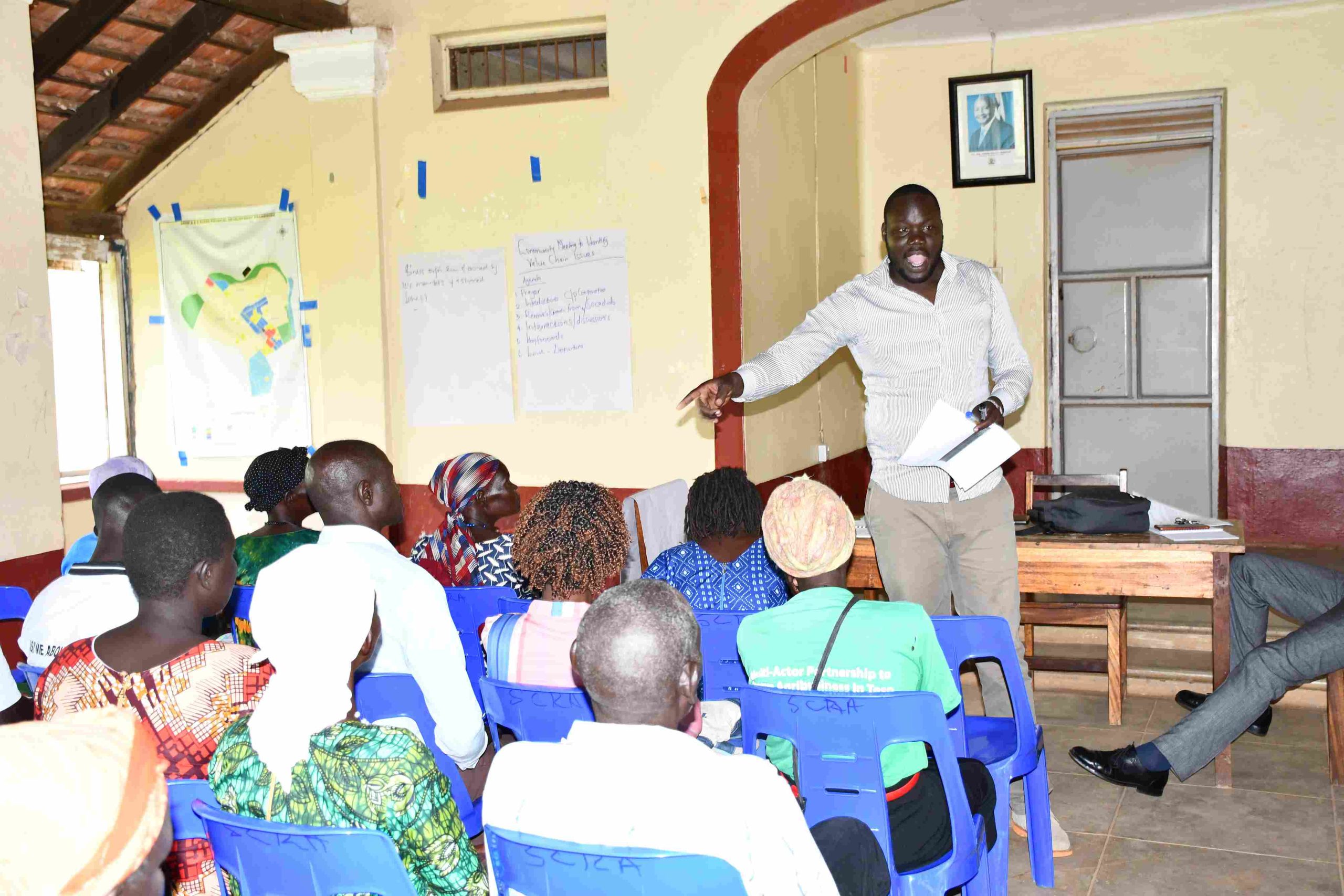
Farmers in Soroti City have been urged to embrace co-operatives as a practical solution to the persistent issues affecting agricultural productivity, market access, and increased household incomes.
The call was made during a community meeting organized under the Ateker Development Foundation Multi-Actor Partnership Phase 2 (ADEFO–MAP2) project at Soroti City, West Division Headquarters, where 120 farmers drawn from 10 farmer groups gathered to discuss constraints along the agricultural value chains and identification of practical solutions.
The meeting, which brought together farmers and 9 technical officers from the city division, focused on discussing the pressing challenges affecting the farming enterprises. In the long-term, the practical solutions will strengthen farmer production capacities and improve agricultural value chains in the Teso sub-region through collective action, value addition, and better coordination among stakeholders. The participants highlighted pests and diseases, poor road networks that hinder transportation of produce, inadequate extension services, post-harvest handling difficulties, and the increasing presence of adulterated agricultural inputs on the market as the main challenges affecting the production stage of the value chain.
Speaking during the meeting, Mr. Opio Andrew Samson, the Project Officer in charge of Co-operatives at Community Integrated Development Initiative (CIDI), an ADEFO member organization, emphasized that co-operatives remain one of the most effective tools for addressing the bottlenecks faced by farmers.
He noted that farmer co-operatives enable producers to engage in collective marketing and bulking, which helps them negotiate better prices for their produce compared to selling individually in open markets where they are often exploited by middlemen.
He added that co-operatives create opportunities for value addition, which remains a critical pathway to increasing profits for farmers’ products. According to him, simple processes such as shelling groundnuts, milling cassava, and sorting produce can significantly improve market value and incomes. “Value addition is one of the key issues that farmers should engage in. Even at a small scale, it helps farmers get better profits in the market,” he said.
Stressing the importance of recruiting and mobilizing more active members, Opio further noted that strong membership is very essential for the success of any farmer association or co-operative. He explained that organized farmers are better placed to advocate for their rights, demand services, and hold duty bearers accountable. “For me, co-operatives are the way to go if farmers are to elevate themselves out of poverty,” he added.
The ADEFO–MAP2 District Project Coordinator for Soroti City, Ms. Ingwara Teddy, said the community meetings are intended to help identify the real needs of farmers from the grassroots so that interventions are relevant and impactful. “We want to understand what our farmers really need, what crops they want to grow, and how they can follow the full process of production and value addition as a group,” Ingwara said.
She explained that the meetings also seek to create awareness among farmers about value chains and the processes involved, from seed selection and production to marketing and value addition. “In many cases, farmers have received a lot of training from different organizations and partners, but challenges still remain. Today, we are here to hear directly from the farmers what those key challenges are along the value chains so that future programming can address the real issues,” she added.
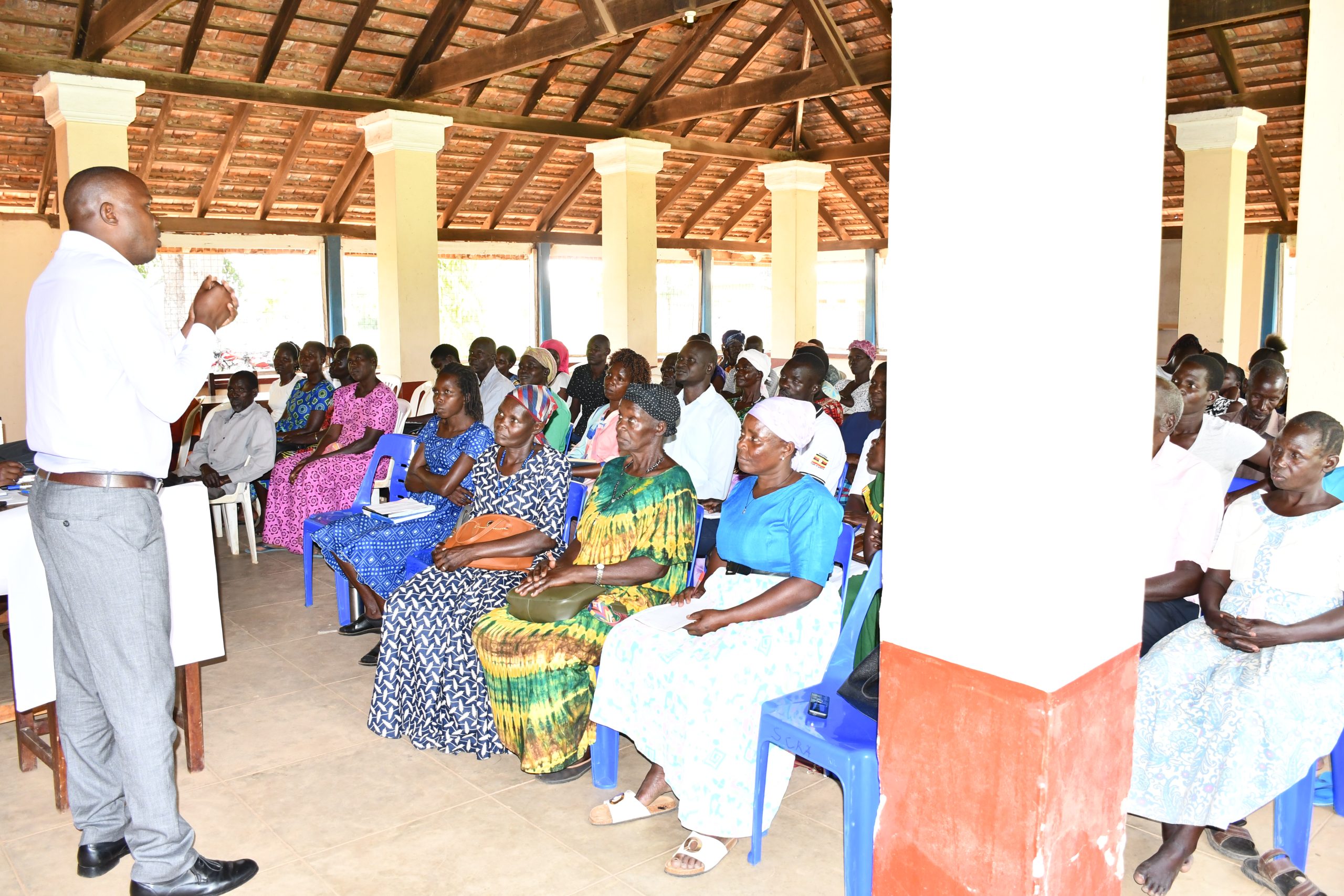
Mr. Okiria Joseph, the Soroti City Production Officer, reaffirmed the city’s commitment to supporting farmers through regular advisory services and market linkages. He pledged that the city would continue conducting field visits to guide farmers and connect them to reliable markets for their produce.
He also encouraged members of the Soroti City West Division Joint Farmers’ Co-operative Society to strengthen their structure so they can improve their bargaining power and earn more from collective sales.
Meanwhile, Amolo Tom Nelson, the Interim Chairperson of the Soroti West Division Joint Farmers’ Co-operative Society said that the newly formed co-operative currently brings together 10 farmer groups and was established mainly to address the challenge of poor market access. “We have just started this society, and it covers 10 groups. One of the key challenges we identified was how to market our produce. That is why we came together as a co-operative because we want to sell our produce jointly,” he said.
He acknowledged that while some farmers were initially slow to appreciate the value of joining the co-operative, more members are gradually coming on board as they begin to understand its benefits.
Key lesson:
The Soroti City West meeting underscored a growing consensus that co-operatives, if well-organized and supported, can play a transformative role in helping farmers overcome value chain challenges, improve productivity, and secure better incomes.
Under ADEFO–MAP2 project, the partnership aims to expand the ADEFO platform into a locally anchored, institutionalized Multi-Actor Partnership (MAP) that, as a strategic network, effectively promotes cooperation, coordination and joint knowledge building along the agricultural value chain, increases the agricultural productivity of smallholder farmers and improve their market access (sales opportunities).
I appreciate the farmers for a shift in the mindset as this is the only way we revive and strengthen our economy and bring back those glory days
Thanks a lot for all these great development articulations for the benefit of our farmers. One of the key challenges to agriculture and farm activities are adverse climate conditions. Rain Fed agriculture is becoming more and more unreliable these days, leading to great losses to farmers.
The rate at which environments are getting degraded by trees being cut for fuel, charcoal, brick burning and construction is much higher than the rate at which others are being planted! “The One Acre Model” of planting trees and keeping free range poultries under them was crafted by the late Dr Okurut Tom to address environment degradation and, at the same time, attack the problem of abject poverty in villages by the horns! This program was planned for rolling out throughout East Africa. I am one of the key crafters of this program, specializing in trainings on free range poultries.
I continue being a Senior Rural Development Consultant based in Wera, Amuria. I provide TOT and also conduct direct trainings of beneficiaries on a range if development approaches. I can, therefore, be reached on call/Whatsapp 0704517101 and 0772517101 for more inquiries and engagements.
Best regards.
But the rate at which the environment is being destroyed is much higher than the rate at which trees are being planted! One Acre Model of planting trees and keeping free range poultries under them will help save the environment and also assist to eject farmers out of abject poverty conditions.
0704516101/0772517101.
It was a great engagement, when partners come together to address partinent issues .