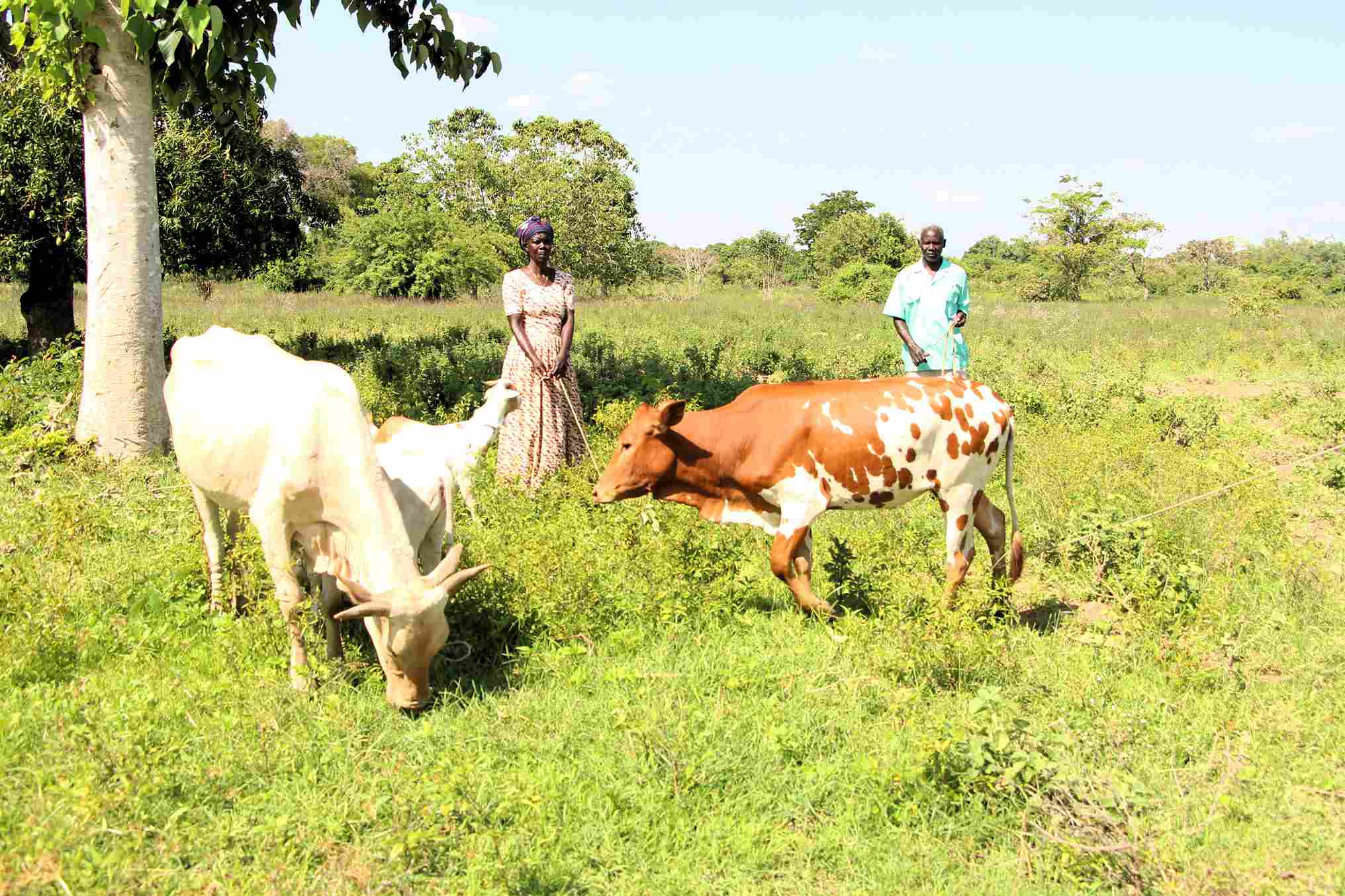
At 62 years old, Charles Otim, a smallholder farmer from Angorom Village, Angorom Parish, Getom Sub County in Katakwi District, knows what it means to struggle for survival.
A husband, father of 11 children, and grandfather of 9 grandchildren, Otim has spent most of his life depending on small-scale farming to feed and support his large family. But before support came through the ADEFO–MAP project implemented by SOCADIDO, life was extremely difficult.
“Before SOCADIDO came, the situation was bad. My daily income was very poor, and my children were not going to school as required,” Otim recalls.
For years, Otim lived in deep poverty, relying on traditional subsistence farming with very little return. Like many vulnerable households in Katakwi, his family faced irregular harvests, low productivity, and almost no savings. The little income he earned from farming could barely meet basic household needs such as food, school fees, and healthcare. With such limited resources, ensuring consistent education for his children and grandchildren was a constant struggle.
At the time, Otim had very few assets to rely on. His livelihood was fragile, and opportunities to improve his family’s welfare were limited. Climate-related shocks, poor access to quality agricultural inputs, and lack of productive capital kept him trapped in a cycle of poverty.
Everything began to change when Otim was supported under the 36-month ADEFO–MAP project (December 2021 to February 2025), which targeted vulnerable farming households across Kaberamaido, Kapelebyong, Katakwi, Ngora, Soroti districts and Soroti City. Through SOCADIDO, Otim received Green gram seeds, a simple but life-changing intervention.
“I express my gratitude to SOCADIDO for waking me up from poverty after giving me seeds that greatly benefited me,” he says.
In the first planting season, despite the challenges of unpredictable weather, Otim harvested 85 kilograms of green grams. He sold part of the harvest and used the money wisely.
“In the first season, I harvested 85 kilograms of soya beans, and after selling part of it, I bought a goat worth UGX 165,000,” he explains.
Rather than consuming all the proceeds, Otim saved some of the seed and planted again in the second season. Although climate shocks reduced his second harvest to 50 kilograms, the results still gave him a foundation to build on.
“The second season was affected by climate shock, but it did not destroy everything,” he says. “I still harvested 50 kilograms and continued moving forward.”
The goat he purchased became the turning point in his family’s livelihood journey. It reproduced, giving birth to four kids, and later more offspring. Over time, Otim sold and reinvested in livestock, eventually upgrading to a cow while also expanding his goat enterprise.
“The goat I bought later gave birth to four kids, and through that progress, I was able to transform it into a cow,” Otim says proudly. “Before the project, I only had two goats, but so far, I now have many more.”
Today, Otim is no longer just surviving, he is planning for the future. With the knowledge and encouragement gained through the project, he has diversified his livelihood and is investing in livestock as a pathway to long-term resilience. He is even constructing a new structure specifically to support his growing goat project.
“As I speak right now, I am planning to expand my goat farm, which is why the new house I am constructing is for the goat project,” he says.
The benefits have gone beyond income. Otim says the project has helped restore dignity in his home and improved access to education for both his children and grandchildren.
“The support has helped me to take my children and grandchildren to school because I have diversified using the knowledge I got from SOCADIDO,” he explains.
Otim remains hopeful and determined. “I wish to continue growing my goat project until I complete my house, ensure my children complete school, and save for my old age,” he says.
Otim’s, small packet of seeds became much more than an agricultural input, it became the beginning of a journey out of poverty. His story reflects the wider impact of the ADEFO–MAP project, which has supported thousands of vulnerable households to strengthen livelihoods, build resilience, and create a better future for their families.