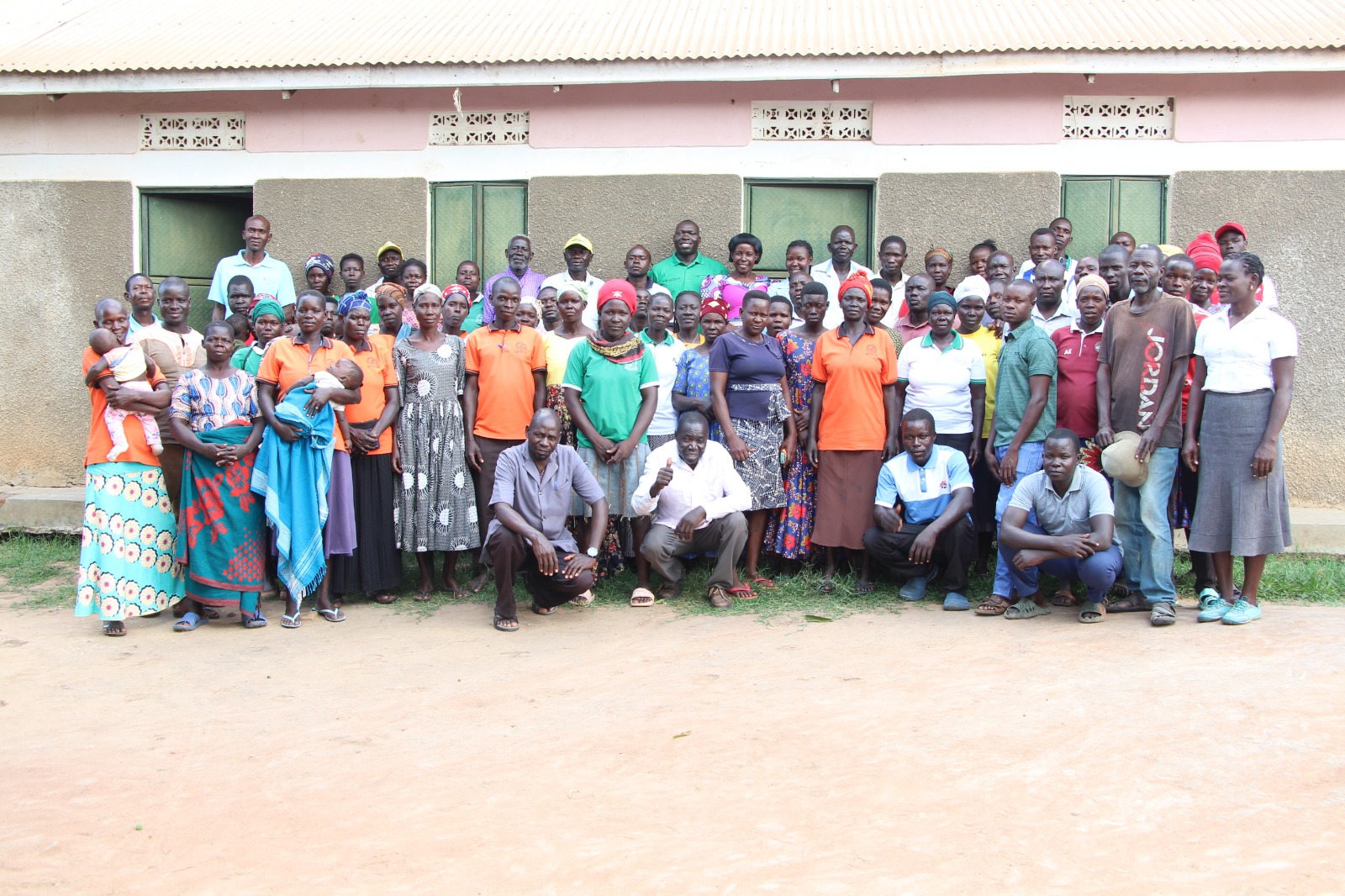
Farmers in Alito Sub-county, Kapelebyong District, have raised critical issues affecting agricultural productivity and market access during a community meeting organized under the Ateker Development Foundation Multi-Actor Partnership Phase 2 (ADEFO–MAP2) project.
The meeting, held at Alito Sub-county headquarters, brought together about 75 farmers from 10 farmer groups to discuss value chain constraints and explore practical solutions for improving agricultural productivity and household incomes. Under the leadership of, Soroti Catholic Diocese Integrated Development Organization (SOCADIDO) and other ADEFO member organizations are working together to strengthen farmer capacities and agricultural value chains in the Teso sub-region.
During the engagement, farmers openly discussed the major challenges they face along the agricultural value chains, including pest and disease infestations, poor road networks, limited extension services, post-harvest losses, the emerging pests and diseases, and the presence of adulterated agricultural inputs in local markets.
The political head (LCIII Chairperson) of Alito Sub-county, Hon. Ongareno Robert, commended SOCADIDO for its long-standing support to the communities and for addressing key challenges facing farmers.
“At this juncture, I want to thank very much SOCADIDO as our development partner which has come to remedy the problems our farmers are facing in agriculture,” Ongareno said.
According to Ongareno, SOCADIDO has played a significant role in improving livelihoods in Alito for many years, dating back to the time of insurgencies when the organization supported communities through water and livelihood interventions. “Even during the insurgencies, SOCADIDO helped people in Alito by drilling boreholes, improving household incomes and building the capacity of farmer groups,” he explained.
Ongareno noted that the ADEFO–MAP2 project is addressing some of the most pressing issues affecting farmers today, particularly the problem of market access. “One of the biggest challenges farmers have been facing is market linkage. Middlemen often exploit farmers by offering very low prices for their produce despite the effort farmers invest in production,” he said.
He praised the project for its efforts of creating linkages between farmers and potential markets, a move he believes will significantly improve farmers’ bargaining power and incomes. Another key intervention under the project has been farmer capacity building. Ongareno noted that many farmers previously lacked adequate knowledge on the appropriate use of agricultural chemicals and crop management practices.
“Farmers did not know which chemicals to use and when to apply them. But now they have gained knowledge, and as leaders we shall continue working hand in hand with them to ensure they apply the skills they have learned,” he said.
He also applauded the initiative to unite farmer groups into a cooperative, describing it as a major step toward strengthening farmers’ economic power. “With over 300 farmers from 10 groups coming together, forming a cooperative will increase their bargaining power, attract investors, and improve access to financial services,” he noted.
According to Denis Omara, Chairperson of Alito Cooperative Society Limited, farmers identified several value chain challenges that require urgent attention, including; pests and diseases affecting crops, poor road networks that limit transportation, inadequate extension services, post-harvest management challenges, and the presence of adulterated inputs in the market.
Omara acknowledged that the presence of SOCADIDO in Alito has already created visible changes in the community. “Since the coming of SOCADIDO, families have experienced tremendous improvements. Some households have constructed permanent houses, bought livestock, and others have even purchased vehicles for business,” he said.
Olaun William, the ADEFO–MAP2 District Project Coordinator for Kapelebyong district, said the meeting focused on identifying practical solutions to the challenges raised by farmers. “One of the key ways forward is strengthening the cooperative because it can address issues such as access to quality inputs, market information, bulking of produce and collective marketing,” he explained.
Olaun also stressed the importance of mindset change among farmers, urging them to transition from subsistence farming to commercial agriculture. “When farmers change their mindset from subsistence to commercial farming, economic transformation becomes possible,” he said.
He encouraged farmers to embrace the project fully and remain proactive in adopting improved agricultural practices. “Times are changing and farmers must act swiftly to adapt. Being dynamic and responsive will enable them to benefit more from these opportunities,” he added.
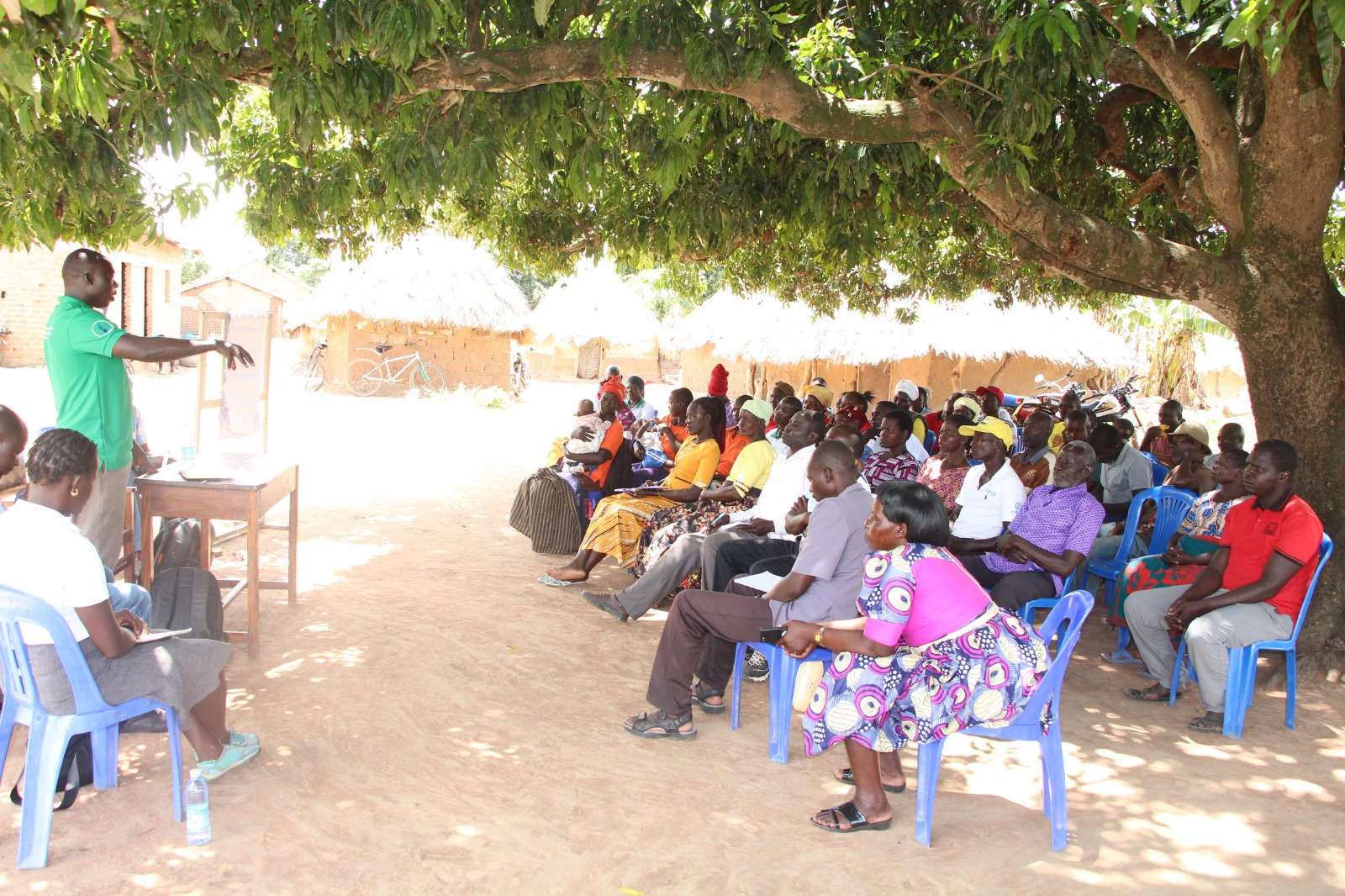
Okia Gideon, a Project Officer with PAG Social Development Services (ADEFO member organization) in-charge of Katakwi and Amuria districts, said the interactive sessions focused on helping farmers understand the different actors within agricultural value chains and their respective roles. “Farmers were able to identify value chain actors, define their roles, and highlight the challenges they face. We believe they have taken home valuable lessons from this training,” he said.
He urged farmers to establish strong committees within their groups to strengthen collective marketing efforts supported by proper bulking systems.
Meanwhile, John Peter Eceru, the Agricultural Officer for Alito sub-county, reaffirmed the district’s commitment to supporting farmers through advisory services and market linkages. “Our plan is to link farmers to reliable markets and provide regular advisory services through field visits. We also want to strengthen the Alito Cooperative so farmers can earn more income from their produce,” Eceru said.
Eceru also praised SOCADIDO for supporting the district with additional extension staff to enhance farmer training and guidance.
Ms. Cana Rose Amoding, Treasurer of Alito Cooperative Society Limited, said that the training has already changed how they approach farming. “Previously we were growing many crops without focusing on any particular one. Now I have learned that for seed production it is better to specialize in one crop,” she explained.
She also noted that farmers have learned the importance of crop rotation in producing quality seeds and controlling crop diseases.
Under ADEFO–MAP2 project, the partnership aims to expand the ADEFO platform into a locally anchored, institutionalized Multi-Actor Partnership (MAP) that, as a strategic network, effectively promotes cooperation, coordination and joint knowledge building along the agricultural value chain, increases the agricultural productivity of smallholder farmers and improve their market access (sales opportunities).
My sincere appreciation to the communications and visibility team
Many thanks team for reaching to the smallholder farmers with knowledge and skills for sustainable livelihoods